Are you wasting money on the wrong marketing channels? Discover which ones give small businesses the best ROI this year.

As a small business owner, you’ve got to make every dollar count, especially when it comes to marketing. With so many channels to choose from, it can be overwhelming to figure out where your hard-earned money will get the best return on investment (ROI). Some strategies work like magic, while others drain your budget without delivering the results you need.

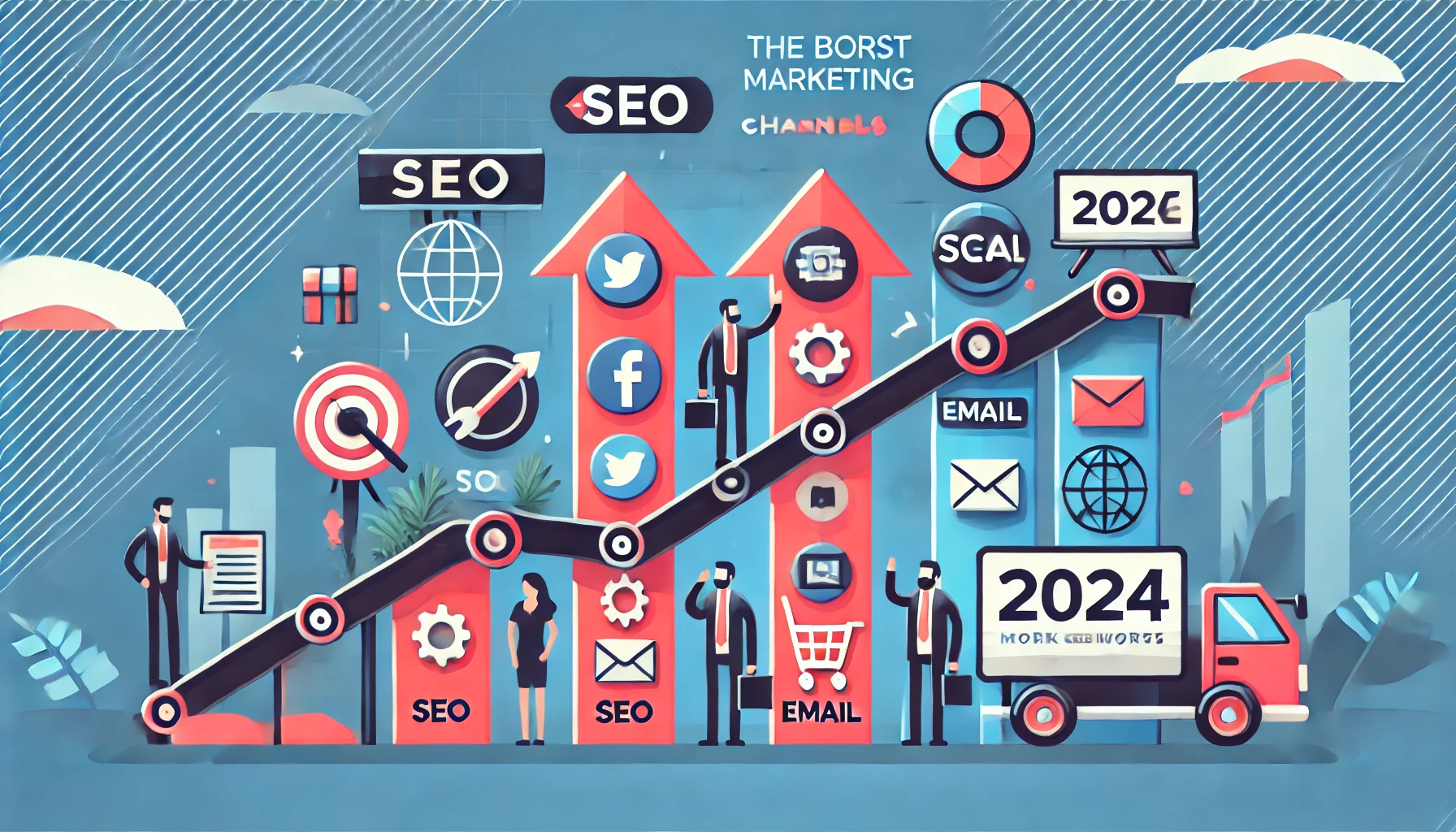
In 2024, the marketing landscape continues to evolve, and staying ahead means understanding which channels are thriving—and which ones are falling behind. Let’s break down the best (and worst) marketing channels for small businesses this year.


The Best Marketing Channels for Small Businesses in 2024

1. Search Engine Optimization (SEO)

Why It Works: SEO is still one of the most effective long-term strategies for attracting potential customers. Ranking high on Google means getting in front of people actively Top marketing channels for small businesses in 2024searching for what you offer. By optimizing your website for relevant keywords, creating high-quality content, and ensuring a user-friendly experience, you can drive organic traffic without paying for each click.

2024 Tip: Focus on local SEO if you have a brick-and-mortar business. Claim your Google My Business profile, optimize for location-based keywords, and encourage positive reviews from satisfied customers.

For more insights on improving your SEO strategy How SEO Can Boost Your Small Business in 2024.

2. Social Media Advertising (Facebook, Instagram, TikTok)

Why It Works: With billions of active users, social media platforms offer highly targeted advertising opportunities. You can narrow down your audience based on demographics, interests, behaviors, and more. Instagram and TikTok, in particular, have seen a surge in engagement, making them great platforms for brand awareness and lead generation.

2024 Tip: Leverage short-form video content, like Reels and TikToks, to boost engagement and visibility. These formats are gaining more traction and offer a cost-effective way to capture attention.

3. Email Marketing

Why It Works: Email marketing remains a goldmine for small businesses. It’s one of the few channels where you can directly communicate with your audience, build relationships, and drive sales. By segmenting your list and delivering personalized, valuable content, email marketing can deliver some of the highest ROI of any channel.

2024 Tip: Automate your email marketing campaigns to nurture leads and re-engage inactive customers. Triggered emails, like cart abandonment reminders or personalized recommendations, can significantly boost conversions.

4. Pay-Per-Click (PPC) Advertising

Why It Works: PPC, through platforms like Google Ads, allows you to bid on keywords relevant to your business. It’s a fast way to get in front of potential customers. The key benefit is that you only pay when someone clicks on your ad, making it easy to track ROI and optimize your campaigns in real time.

2024 Tip: Use PPC for highly targeted campaigns, especially when testing new markets or promoting seasonal offers. Focus on optimizing ad copy and landing pages for conversions, not just clicks.

5. Content Marketing (Blogs, Videos, Podcasts)

Why It Works: Content marketing builds trust, educates your audience, and improves your SEO. Whether through blog posts, videos, or podcasts, creating valuable content positions your business as an authority in your industry. It’s a powerful way to engage with your audience over time and drive traffic to your website.

2024 Tip: Repurpose your content across multiple platforms. For example, turn a blog post into a video or break down a podcast episode into social media snippets to maximize your content’s reach.

The Worst Marketing Channels for Small Businesses in 2024

1. Print Advertising

Why It’s Failing: While print advertising might still work for some niche industries, its overall effectiveness has been steadily declining. In 2024, digital marketing channels Worst marketing channels for small businesses in 2024offer far more targeting and tracking capabilities, which means better ROI. Print ads are also more expensive and harder to measure in terms of results.

2024 Tip: If you’re set on traditional advertising, consider hybrid options like direct mail with digital tracking (such as QR codes or personalized URLs) to measure engagement.

2. Television Ads

Why It’s Failing: Unless you have a massive budget, television ads aren’t the best use of your marketing dollars. They’re expensive, hard to target, and don’t offer the granular analytics that digital channels provide. In an era where viewers are increasingly cutting the cord and opting for ad-free streaming services, TV ads are losing their influence.

2024 Tip: If video is your focus, try YouTube ads or video marketing on social platforms instead, where targeting is more precise, and budgets are flexible.

3. Billboard Advertising

Why It’s Failing: Like TV and print, billboard advertising can reach a large audience, but it’s a broad approach that doesn’t offer much targeting. With so much focus on digital channels, it’s difficult to measure the direct impact of billboard ads on your business. Additionally, as people spend more time on their phones, they may not even notice billboards anymore.

2024 Tip: If outdoor advertising appeals to your business, consider geofencing ads, which use location data to deliver ads to mobile devices when potential customers are in a specific area.

4. Cold Calling

Why It’s Failing: Cold calling used to be a staple for lead generation, but it’s increasingly seen as intrusive. Most people prefer to research products and services online before engaging with a business. In fact, many people ignore unsolicited calls, and the success rate of cold calling continues to plummet.

2024 Tip: Focus on inbound marketing strategies that encourage potential customers to come to you through valuable content, SEO, and targeted ads, rather than relying on outdated cold calling tactics.

Wrapping It Up

In 2024, the best marketing channels for small businesses are those that offer precise targeting, measurable results, and the ability to adapt to customer behaviors. Digital marketing continues to outperform traditional channels in terms of ROI, especially with the rise of data-driven strategies like SEO, social media advertising, and PPC.

Don’t waste your budget on outdated, ineffective methods. Instead, invest in the channels that are proven to deliver results for your business. With the right approach, you can attract more customers, increase your visibility, and boost your bottom line—all without breaking the bank.

Studies show that small businesses with optimized digital marketing strategies see a higher ROI than those relying on outdated methods (Business News Daily).

Ready to optimize your marketing channels? Let Webociti help you craft a strategy that brings the best ROI in 2024. Contact us today for a free consultation.

In today’s digital age, businesses of all sizes are thrust into a competitive landscape where a strong online presence is not just advantageous; it’s essential for survival and growth. As the internet continually evolves, so do the strategies and tactics that underpin successful digital marketing. It’s an arena fraught with complexities, a myriad of options, and rapid changes. Navigating this landscape without expertise is akin to embarking on a perilous journey without a map or compass. This is where the role of a marketing professional becomes indispensable.

The Digital Marketing Dilemma

Digital marketing encompasses a vast array of strategies, including social media marketing, content marketing, search engine optimization (SEO), pay-per-click advertising, email marketing, influencer marketing, and more. Each of these strategies can be further subdivided into countless tactics. The bewildering variety of options can be overwhelming for businesses, leading to a haphazard approach that squanders precious resources.

Consider this: A company decides to invest heavily in pay-per-click advertising without a clear understanding of its target audience and the keywords that resonate with them. They might generate traffic, but if that traffic isn’t converting into customers, it’s an exercise in futility. This is a scenario that plays out far too often in the digital marketing landscape.

The Role of a Marketing Professional

Marketing professionals are trained and experienced in deciphering this complex digital ecosystem. They serve as the lighthouse, guiding businesses safely through the digital marketing sea. Here’s why their role is indispensable:

Strategic Planning

Marketing professionals begin by developing a comprehensive digital marketing strategy tailored to the specific needs and goals of your business. This strategy is not a one-size-fits-all approach but a carefully crafted blueprint that considers your target audience, industry trends, competition, and available resources.

Target Audience Understanding

Understanding your target audience is at the heart of effective digital marketing. Marketing professionals conduct in-depth research to identify your ideal customers’ demographics, interests, behavior, and pain points. This knowledge forms the foundation for crafting messages that resonate and campaigns that convert.

Maximizing ROI

Investing in digital marketing without a clear strategy can be a black hole for your budget. Marketing professionals allocate your resources wisely, focusing on strategies and channels that are most likely to yield a high return on investment (ROI). This approach ensures you get the most bang for your buck.

Navigating Algorithm Changes

The digital landscape is in a constant state of flux. Search engine algorithms change, social media platforms update their policies, and consumer behaviors evolve. Marketing professionals stay abreast of these changes and adapt strategies accordingly to maintain or improve your online visibility.

Content Relevance

Content is king in digital marketing, but not just any content will do. Marketing professionals curate and create content that aligns with your audience’s interests and needs. They ensure your content is not just visible but also valuable and shareable.

Measuring Success

Key performance indicators (KPIs) are the compass by which digital marketing success is gauged. Marketing professionals track and analyze data to measure the performance of campaigns continually. If something isn’t working, they pivot and refine strategies for better results.

Options Galore: Why Expertise Matters

One of the most significant challenges in digital marketing is knowing which options to pursue. Should you invest more in SEO or focus on paid advertising? Which social media platforms are most suitable for your business? Is content marketing the way to go, or should you explore influencer partnerships? The choices are endless, and the wrong decisions can lead to wasted time and resources.

Paid Advertising

Pay-per-click (PPC) advertising, such as Google Ads and Facebook Ads, offers instant visibility. However, without expert management, it’s easy to overspend on keywords that don’t convert or target the wrong audience.

SEO

Search engine optimization is the long game of digital marketing. It involves optimizing your website to rank higher in search engine results pages (SERPs). SEO is essential for organic traffic growth, but it requires meticulous keyword research, on-page optimization, and backlink strategies.

Content Marketing

Content is a powerful tool for engaging and educating your audience. Yet, producing content that stands out and ranks well requires knowledge of SEO, content strategy, and audience personas.

Social Media

The social media landscape is vast, with platforms catering to different demographics and niches. A marketing professional can identify which platforms align with your target audience and create compelling campaigns.

Email Marketing

Email remains one of the most effective ways to nurture leads and retain customers. Crafting emails that convert, segmenting your audience, and monitoring engagement are all critical aspects best handled by experts.

Conclusion

In the expansive realm of digital marketing, the guidance of a marketing professional is not a luxury but a necessity. They are the navigators who ensure your ship sails smoothly through the treacherous waters, avoiding costly mistakes and reaching your destination with efficiency. Digital marketing isn’t guesswork; it’s a science, and marketing professionals are the scientists who make it work for your business. So, if you’re setting sail in the digital marketing sea, make sure you have an experienced captain at the helm to chart your course to success.

Ready to Get Started

Are you ready to elevate your digital marketing efforts and achieve meaningful results? At Webociti, our team of experienced marketing professionals is here to guide you. Discover how our tailored strategies can help your business thrive in the digital landscape. Contact us today to get started on your path to digital marketing success! 678-892-7157