
Marketing Automation Strategies & Insights

Marketing automation helps businesses scale lead generation, improve follow-up,
and align marketing and sales without adding operational complexity.

This collection of marketing automation insights explores how companies use
automation to streamline lead management, email marketing, analytics, and
performance tracking. Each article focuses on practical systems that reduce
manual effort while increasing efficiency, consistency, and ROI.

If you’re looking to work smarter, improve visibility into performance, or
create scalable marketing systems, explore the articles below or learn more
about our

Marketing Automation Services
.

Email is the One Marketing Strategy You Can’t Afford to Ignore

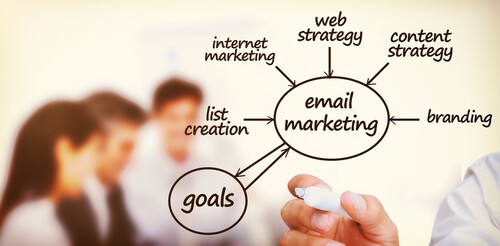
You have probably heard the statistics: millions of businesses are using e-mail marketing and it is incredibly difficult to gain attention in people’s overcrowded inboxes. If you’re waiting around to be picked up with the junk mail, then you’re doing email marketing the wrong way! When you work with your prospects and customers to provide messages that are engaging and interesting to read — and that add true value to the reader — your emails are much more likely to be read. Nurturing your prospects and turning customers into advocates is not a shift that happens overnight. It takes work, empathy and a willingness to think long and hard about each message before sending it to be successful in this crowded environment. Do you have what it takes to create an email marketing strategy that simply cannot be ignored?

The Power of Email Marketing

If you have been in business for a few years, you are probably already sending a sporadic email or two to your list. You may even have what feels like a strong strategy with a bi-weekly or monthly newsletter. Have you noticed that your open and click rates are dropping off a bit and that your list tends to stagnate over time? The same people are opening your emails, but they are not necessarily taking action on the information that you are providing. Emails can be sent for a variety of different reasons such as information, engagement to read more or to make a purchase. With 73% of the rising Millennial spenders looking to email as their preferred method of communication and 2.9 billion email users worldwide by 2019, now is the time to take full advantage of this powerful communications medium.

There are five steps you should take on your journey to email marketing nirvana: building audience personas, cementing a strategy, mapping customer journeys, writing like a human and looking for ways to personalize.

Building Audience Personas
E-mail marketing
Whether or not your organization has a robust CRM (Customer Relationship Management) platform, it is critical that you first understand who you are speaking to. Think of it like this: when you go into a meeting, you have a general idea of how Bob in Finance is going to react to a particular suggestion, and you can phrase your message in a way that Bob is most likely to accept. The same is true of email marketing. You must deeply understand your prospects and customers in order to nuance your message to be heard in their language. Spend time digging into your current customer and prospect data. Can you determine some traits that are shared by your best customers? What about people who have never purchased from you?

These tidbits of information, along with data from your social media channels, can be compiled into audience personas that you can use in your ongoing communications.

Cementing Your Strategy

Okay, you may not want to put your strategy in actual cement, but it is good to at least firm it up a bit. Sending emails off the cuff based on a whim is rarely a good business decision. Customers are fickle (and prospects are worse!), and once they decide that your message is not relevant to their needs — they will unsubscribe quickly or send your messages straight to spam. Forming a strategy helps you focus your efforts on where they will do the most good. This could be around upcoming sales and special offers or times of the year, for instance. Once you have a strategic direction in mind, your next step involves crafting actionable metrics. Click rates and open rates are nice to know, but the true value of metrics is being able to measure the final outcome: a purchase, a download or a phone call.

What’s best is that a strategy gives you a roadmap. Once you create a strategy, pass it off to someone else to implement — but always keep track of the actionable metrics to assure that it’s being executed to plan. Don’t be afraid to make tweaks mid-stream, either!

Understand Your Customer’s Journey

Journey mapping for your customer can be as simple or as complex as you would like. A simple version of a journey map would include steps such as how the prospect became aware of your offering (via a search ad), the landing page where they submitted their contact information and the final step it took to push them over the edge to purchase. A more complex map could include each of the standard phases:

  • Awareness
  • Consideration
  • Purchase
  • Retention
  • Advocacy

You may have a different email strategy for each of these various stages, always in an effort to move individuals further down the path to advocacy for your brand.

Develop a Likable Voice

Marketing Voice
Your brand’s “voice”, or the way you convey your messages, says a lot about your brand. A high-end clothing brand is likely to speak differently to their customers than a Chuck-E-Cheese, for instance. While these are two extremes, everything from your selection of specific words to your use (or overuse!) of exclamation points helps your customers form an opinion of your brand. Look for a way to communicate authentically at all times. Some marketers find it helpful to write as if they’re communicating with a trusted friend, which adds a layer of personality, style and warmth that might otherwise be lacking.

Make it Personal

Today’s personalized emails go far beyond “Dear Mike”, and include everything from messages that contain details about previous purchases to up-sells for items that customers have viewed on your website. This new level of high-tech personalization draws upon all of the sources of metadata that could exist for your customer and pulls them together into a cohesive message map. Email open rates with personalization are 30% higher, and consumers are 80% more likely to make a purchase from an email that is targeted to their unique needs and wants. Overall purchase rates can increase as much as 20%, according to recent statistics from Campaign Monitor. Abandoned cart emails are particularly effective, and followup emails for purchases that include review requests are as well.

While all of these tactics build together to create a great strategy, don’t forget one of the cardinal rules of marketing: ask for feedback! Provide your customers with ample opportunity to tell you what resonates and what fell flat. When your customers are given the opportunity to offer their ideas for your improvement, be sure you are showing that you are not only listening — but making changes based on their recommendations.

Are you ready to put these stellar email best practices to work in your business? Contact Webociti today to get started at 678-892-7157 or fill out our quick online contact form to receive your free personalized consultation. We provide marketing automation, social media marketing and digital advertising services for all types of organizations from doctors and dentists to automotive industries, legal and real estate professionals!

Marketing automation is not a new phenomenon. It has been around since software was first used to insert names and addresses in a direct mail piece generated by word processing software. Direct mail marketers have used automation for decades.

Marketing automation has evolved since that early time with the main difference being that modern marketing automation tools deliver your message in real time and helps you navigate the unending data available about your customers using both digital and offline communication channels.

Some marketing automation can take place on your business’s website. When a visitor signs up for your newsletter, your site immediately sends an email to the visitor welcoming then to your newsletter mailings. Collecting the email address and sending a welcome email are examples of how marketing automation can work.

Every Business Can Afford Marketing Automation

When marketing automation first came on the scene, it was a style of marketing reserved only for companies that were financially successful since they built their own software “in-house.”

As the efficacy of automated marketing became obvious, there was a proliferation of third-party vendors that created Software as a Service (SaaS). While most automation services do charge a fee for automation tools, there are some automated marketing tools that are free.

Free Online Marketing Automation Tools

There are all sorts of free marketing software available for small and medium-sized businesses.

Some, like buffer only do one thing, in buffer’s case that thing is posting automatically on social media. The company offers a two-week free trial and a free small user account.

Others, like the free version of mautic offers many automation solutions for your online marketing that include:

  • Core features
  • Custom domain
  • Dedicated On-boarding and Training
  • Phone and Email Support
  • Contact Database
  • Contact Import
  • Metrics
  • More

By the Numbers

Most companies cite “saving time” as the main reason for using marketing automation. Following are 10 statistics about marketing automation that relate to marketing automation benefits.

  1. 71% of companies report they use marketing automation.
  2. Saves time – 74%
  3. Increase customer engagement – 68%
  4. More timely communication – 58%
  5. More opportunities including up-selling – 58%
  6. Reduces marketing expenses, on average by 12.2%
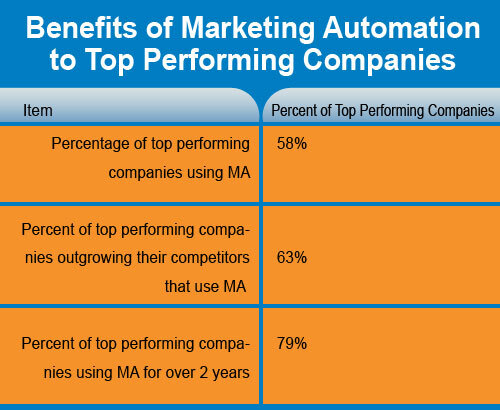
  7. Companies heading towards the top tier of their industries and use MA – 63%
  8. 70% of companies outsource all or part of their lead generation strategies.
  9. The primary pain for companies using marketing automation is finding the right staff to maintain social media sites and content – 73%
  10. 61% of companies reported that implementation of MA is difficult.

So, companies agree that their reach and message are vital to their online marketing and using MA is a sound way to transmit their messages. But, nearly two-thirds of company that have implemented marketing automation say it was hard to implement.

How Webociti Can Help Your Online Marketing

Small and medium-sized businesses are the ones that find it difficult to implement a marketing automation plan. If your company is struggling with online marketing because of marketing automation issues,  contact me for help.

Webociti is an internet marketing agency specializing in marketing strategy, planning and implementation. We provide digital marketing services in the following areas; search engine optimization (SEO) pay-per-click (PPC) advertising management, SEO Website design, Website development, social media marketing, marketing automation services, marketing consulting, SEO training, and business consulting services.

Until next time,

Joe Mediate


Optimizing the Marketing Funnel:
How Digital Marketing, SEO, and Content Drive Sales

In the digital age, mastering the marketing funnel with digital marketing, SEO, and strategic content is essential for standout success. At Webociti, we transform prospects into loyal customers by tailoring our approach to each stage of the funnel, backed by success stories and actionable insights.

A well-optimized marketing funnel does more than just guide customers. It builds trust, creates meaningful touchpoints, and aligns your sales and marketing efforts to ensure consistent revenue growth. The result? More engaged leads, higher conversion rates, and long-term customer loyalty.

<

What is a Marketing Funnel and Why Does It Matter?

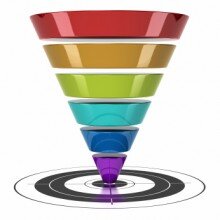
The marketing funnel is a framework that guides potential customers through different stages of their buying journey:

  • Awareness (Prospect): Customers discover your brand and identify their problems.
  • Consideration (Lead): Customers evaluate solutions and compare providers.
  • Decision (Customer): Customers choose your solution and make a purchase.
  • Loyalty (Repeat Buyer): Customers return for repeat purchases and advocate for your brand.

To explore more about marketing funnel strategies and proven methods for success, check out this comprehensive guide on optimizing your marketing funnel.

Marketing Funnel

Content Strategies for Each Funnel Stage

1. Awareness Stage: Attracting Prospects

During the awareness stage, your goal is to draw attention and build trust. SEO-optimized content like blogs, videos, and social media posts help you target customer pain points and spark interest.

  • Example: Blog post titles like “5 Ways to Reduce Energy Bills This Winter” attract users looking for solutions.
  • SEO Tip: Target long-tail keywords to attract relevant traffic to your website.

2. Consideration Stage: Nurturing Leads

At this stage, customers are looking for deeper information. Gated content, such as whitepapers, webinars, and case studies, allows you to capture leads while positioning your brand as an authority.

  • Example: Create a whitepaper titled “How to Save 20% on Your Business’s Electric Costs.”
  • Actionable Insight: Use clear CTAs like “Download Now” to encourage lead capture.

3. Decision Stage: Converting Leads into Customers

Prospects in the decision stage need reassurance. Detailed product guides, customer testimonials, and comparison charts help them choose your solution over competitors.

  • Example: A client testimonial video showcasing how your services solved a real-life challenge.
  • Tip: Offer limited-time promotions to create urgency.

4. Loyalty Stage: Building Repeat Business

Loyalty isn’t automatic—it’s earned. Regular newsletters, personalized offers, and loyalty programs keep customers engaged and coming back.

  • Example: Send exclusive coupons or early access to new products for returning customers.
  • Fact: Existing customers spend up to 67% more than new ones.

Case Study: Real Results with a Targeted Funnel Strategy

A small electrical contractor struggled to generate leads with only a basic website. Webociti developed a strategic funnel, including:

  • Awareness: Blog posts addressing energy efficiency tips.
  • Consideration: Whitepaper download: “How to Lower Energy Costs in Your Home.”
  • Decision: Email campaigns with case studies and customer success stories.

Results? A 35% increase in qualified leads and a 20% boost in revenue within 6 months.

Transform Your Marketing Funnel Today

Optimizing your marketing funnel is the key to sustainable growth. At Webociti, we combine digital marketing, SEO, and targeted content strategies to drive measurable results.

Ready to get started? Contact us today at 678-892-7157 for a free consultation and take the first step toward transforming your business.

Marketing Automation Isn’t Just for the Big Guys

According to a recent report by Software Advice, a division of Gartner that helps businesses find software, reveals that with almost unanimity, most businesses are looking for a marketing automation solution. 98 percent of businesses interviewed for the study reported this need.

And, the report from Software Advice also noted that 84 percent of the businesses surveyed have revenues that are less than $5 million.

Marketing Automation

The reason for this is social networking offers companies a new marketing channel, but social media marketing can be a time sink – it requires frequent updates and special deals for followers of your company. Many businesses tweet coupons to existing customers and customers following their company. Additionally, special offers abound to Facebook followers. It is likely that social media network integration is the driver behind the coming generation of marketing automation.

What is Marketing Automation?

Marketing Automation (MA) is a type of technology that lets firms automate, streamline, and measure marketing chores for the purpose of increasing the efficiency of operations in order to grow revenue more rapidly.

It is a tactic used to foster inbound marketing. Most Internet marketers are aware that potential customers started learning about your products and those of your competitors way before your sales team has an opportunity to reach them. This makes your job as an Internet marketer expand from finding new customers, to also assist you in having them find you – when they find you and react positively to you that is inbound marketing.

Central to inbound marketing is the creation of content that is informative, interesting, entertaining and valuable that you use across many online channels for the attraction and engagement of visitors and converting them from visitors to customers.

There is a large group of marketing automation firms that enables you to track how a potential customer interacts with your brand. Reports generated by most of these companies tell you if there was email click, content downloads or website visits and more. These are a type of digital clue that gives you powerful insight as to your prospect’s willingness to buy from you and gives you the opportunity to send timely marketing messages that shorten the time needed for the buyer’s decision-making process.

How Marketing Automation Works

Customer behavior, workflow, or campaign triggers a system to move a sales lead through your entire sales process. Marketing Automation could be a number of drip communications that continuously cultivates the lead as they make their purchase decision. In addition, the workflow also serves to aid you in qualifying the lead, or even better, scoring the lead in terms of how soon they need a call from a member of your sales department.

Choosing a Marketing Automation Application

Every business has different needs. Choose your Marketing Automation vendor based on the best fit for achieving your business goals and objectives. While having a feature rich Marketing Automation system is nice, ask yourself if it’s necessary. Many times the bells and whistles on Marketing Automation systems are never used. So, get a Marketing Automation system that matches your marketing needs as regards to goals and objectives.

What is the Real Gain in Using Marketing Automation?

The short version – businesses using marketing automation see better data and higher conversion rates.
blogitem1

Marketing Automation Disadvantages

There are drawbacks to Marketing Automation that every business needs to be aware of:

  • The biggest is that Marketing Automation while a time saver is also a time sink as it still requires a great deal of work.
  • Your in-house marketing team may not have the skills needed to use Marketing Automation.
  • Do your specific marketing solutions need to be automated?

Webociti is a complete Internet Marketing Firm that can help you choose a Marketing Automation provider and do the heavy lifting needed to advance your Marketing Automation investment. At Webociti, we turn clicks into customers. Call us at 678-892-7157.


Save

Lead Management

Building Your Own Effective Lead Management Generation Program

Is your boss asking you why your marketing generation isn’t more effective? In my experience helping many companies improve lead generation, I find that most of the time the answers are,

  1. They do not understand their buyer
  2. They lack familiarity with the buying process
  3. There does not exist a content structure for potential client communications

So, where do we start?

Know Your Buyer

In order to know who your buyer is, develop buyer personas. This should be a joint project of marketing and sales. By having both groups working together helps reduce the risk of skewed personas. When sales and marketing people share their unique perspectives about customers the end result is a more holistic view. Only use 1 to 3 personas, more and you will be muddled and your plan less effective.

When developing personas, I recommend that you determine buying groups by function and not a title. Instead of Director of Technology, use ‘technology buyer.” Instead of Chief Operating Officer, use more generic listings such as ‘office supply buyer.” These personas are used as target groups that often affect or decide the buying decision.

Define the information that helps your company nurture leads. These include items such as,

  • Role in the company
  • Personal background
  • Daily activities
  • Industry news sources
  • Challenges

Don’t panic, you are only listing information that helps your firm nourish leads, you do not need to fill the information in now.

Once you have your personas identified and your information categories fixed create a matrix. Buying groups go on the x-axis and information categories on the y-axis.

Complete the matrix by using a bulleted list. For example, if the buying group is technology and the information category is daily activity, a list might look like,

  • Send a response to emergency calls;
  • Check operational efficiency;
  • Manage vendor relationships;
  • Manage staff

Define the Purchasing Process

To begin, schedule a meeting with sales and marketing teams specifically to define the buying process.

Next, create a flowchart that identifies the decisions and steps the buyer must undertake. A good start is to ask, “What triggers a buyer to seek us for a solution?” Followed by another question such as, “what are the buyer’s next steps?” Keep asking the group follow up questions. Write the responses on a whiteboard to create an initial buying process map.

Once you have created your initial buying process map, validate it through research. Use methods like,

  • Interview prospects;
  • Interview buyers;
  • Hold focus group meetings with prospects;
  • Hold focus group meetings with buyers.

Based on your research findings revise your initial draft of the buying process.

Once the revisions are finished, check with internal stakeholders to get their thoughts; choose people from several areas including,

  • Sales;
  • Business development;
  • Marketing

Also get in touch with existing customers, use the phone or arrange for small group meetings.

Develop a Framework for Content

Once again, call a meeting with the sales and marketing staffs. (See the pattern, marketing and sales work together!)

Create a second matrix, on the x-axis list buying process stages and on the y-axis buyer personas. Use bullet points to list the answers to questions for each persona in each stage. Questions should be inquiring such as,

  1. Which questions does the buyer ask at this stage?
  2. How should we answer those questions?
  3. What is the best method or medium to answer questions?
  4. What behavior do we want to see from prospects when we answer their questions?

If you would like to learn more contact us at Our marketing team is ready to help you take your company to the next level We look forward to working with you!

Till next time

Joe Mediate

Save

Webometer The Dynamic Pricing Tool.

Webometer is a cost-effective and easy to use dynamic pricing tool – able to provide inventory pricing and competitive pricing analysis in real time, so you can easily make instant inventory price adjustments that help maintain your competitive advantage. It is the ideal solution for retailers who also advertise and sell products online, and for e-tailers who carry large inventories of over 500 products.

Webometer Dynamic Pricing Engine Facts

Webometer is an innovative, intelligent inventory pricing engine that generates timely knowledge about your competitor’s pricing, especially important for

  • This is the innovative solution that meets your needs for competitive pricing information.
  • No expensive hardware purchases are required.
  • You can access the most current data and information in real time.
  • Webometer facilitates dynamic pricing and inventory control.

How It Works

Webometer replaces time-intensive personal research to determine competitive pricing, allowing you to make faster price changes and inventory decisions. Because it is cloud-based, there is no need for expensive new hardware to use Webometer; everything you need is included in our low monthly fee. Your costs are kept to a minimum, while you gain maximum benefits.

Once you sign up for Webometer, you can put it to work instantly. With this handy cloud-based product, you can quickly make adjustments to pricing and feed updates to all your online sales outlets. Webometer Dynamic Pricing Tool With Webometer, you can feed data changes to a wide variety of popular online shopping engines, including: Google Shopping, Price Grabber, & NexTag. Our e-Commerce Data Integration gives you a simple and fast way to transmit data into major platforms like Asp.net Storefront, Big Commerce, CV3 (Commerce V3), Magento, Shopify and Volusion.


Why Is This Important?

There is plenty of truth in the old adage, Time is Money. You know from experience what a huge job it is to research competition, manage your inventory and make important and timely pricing changes that enhance your sales advantage. With Webometer, you can accomplish all these time-intensive and expensive tasks in a fraction of the effort and cost.

When you use Webometer, you increase your ability to protect your cash flow and make decisions that grow your business faster. Profit margins are typically increased by retailers from 10% to 70% with this active management tool. People who shop online usually browse around to find the very best prices, deals and exceptional values before they purchase. With Webometer, you have an affordable resource to use to maintain your edge for attracting those value-seeking buyers.

Control Price Sensitivity Variations

Pricing varies according to several factors, including popularity, availability and the life cycle of your stock. New items have a different pricing strategy than older items. As you reach the end of a supply, you want to be operating with the most current data when making pricing decisions for adjusting prices. With Webometer, not only can you track the item and pricing at your competition, you can easily and quickly make automatic changes to your own pricing according to your preset rules. Webometer is an innovative solution that provides intelligent inventory pricing management in real-time.

Your retail business needs Webometer the dynamic pricing tool managing its inventory to be price competitive in the market. Contact us online or Call us at Webociti now, at 678-892-7157, and we’ll answer all your questions about Webometer.

Save

Atlanta Marketing Companies

When it comes to marketing your business, today’s world is more competitive than ever. To stand out from everyone else, it takes hard work combined with knowledge and experience.  Whether it is a large company or a small business just starting out, developing and implementing an effective online campaign can make all the difference. Rather than take a chance on a campaign that goes nowhere, it’s always best to work with a team of experts who have the desire to take your business to the next level.  When you want the premier marketing experts in the Atlanta area, go with the team at Webociti.

Why Webociti?

Using a team of internet marketing consultants with extensive experience in business-to-business and business-to-consumer campaigns, Webociti has gained a reputation as one of the best Atlanta marketing companies. No matter the needs of your company, we at Webociti can help you get where you want to go. We specialize in many different areas of internet marketing, including:

  • Search Engine Optimization
  • Social Media Marketing
  • Website Design and Development
  • Internet Marketing Consultation

When you put your trust in us, we take the time to understand you and your business.  By knowing what goals you have for your business, we can design a campaign that puts your goods and services in front of customers and makes them want to do business with you.

Straight Talk

Many businesses have worked with other Atlanta marketing companies that may have only told them what they thought their client wanted to hear.  As a result, their marketing campaigns were not only expensive, but also ineffective.  However, here at Webociti, we take great pride in developing relationships with our clients that result in clear channels of communication.  We will give it to you straight each and every time, making sure all of us are on the same page when it comes to marketing your business.  Rather than doing things just one way, we take the best of traditional marketing methods and combine them with many of today’s newest and most effective ideas.  When we do, success is the result.

Contact Us Today

When your business needs a helping hand to gain a stronger online presence, contact us here at Webociti. Along with being one of the premier Atlanta marketing companies when it comes to online marketing, we are also known for our commitment to our clients and their customers. Contact us today by calling 678-892-7157, and we can start building a partnership with you and your business that will leave your competitors far behind.

TL;DR: Physician practice marketing isn’t about tactics — it’s about building a compliant system that increases patient demand, builds trust, and drives consistent appointment growth.

In Summary

The most successful physician practices grow through visibility, credibility, and structured patient acquisition — not random marketing activity. A strategy-first marketing system turns online searches into scheduled appointments.

Why Physician Practices Struggle to Grow — Even With Great Care

You can provide exceptional care and still struggle to grow.

Today’s patients research symptoms, compare providers, read reviews, and evaluate credibility long before they ever call your office.

If your practice isn’t visible, trusted, and easy to choose online — patients move on.

Physician practice marketing is no longer optional. It’s the engine behind sustainable patient acquisition.

Without a clear system, growth becomes unpredictable.

With one, it becomes measurable.


How Patients Actually Find Physicians Today

Search engines now act as the front door to your practice.

Patients look for:

  • Specialists near them
  • Symptoms and treatment options
  • Insurance compatibility
  • Reviews and reputation signals

An effective physician SEO strategy positions your practice at the exact moment patients are actively seeking care — not interrupting them, but meeting them with relevance and authority.

This is high-intent marketing.

And it compounds over time.


Marketing That Supports Compliance and Growth

Healthcare marketing must balance growth with compliance.

A strategy-first physician marketing system integrates:

  • Local SEO for patient visibility
  • Educational content that builds trust
  • Conversion-optimized pages that encourage scheduling
  • Paid campaigns that accelerate demand
  • Automation that improves follow-up and retention

Not isolated tactics.

A coordinated growth engine.

Physician practice marketing growth system

Ready to build predictable patient growth?

See how a structured, compliant physician marketing system turns search traffic into scheduled appointments.


Explore Healthcare Marketing Services →


Marketing Automation: Growth Without Adding Staff

Consistent patient acquisition requires consistent follow-up.

Marketing automation helps your practice:

  • Respond faster to new inquiries
  • Nurture prospective patients
  • Reduce front desk burden
  • Improve long-term retention

It strengthens patient experience — while freeing your team to focus on care.


Social Media: Reinforcing Trust, Not Chasing Trends

Social media should support your authority — not distract from it.

For physicians, this means:

  • Educational content
  • Community credibility
  • Professional presence

Patients often encounter your practice socially before ever visiting your website. Consistency builds familiarity. Familiarity builds trust.


Physician Practice Marketing Is About Trust

Growth doesn’t come from aggressive promotion.

It comes from clarity.

When patients clearly understand:

  • Who you serve
  • What conditions you treat
  • Why you’re qualified
  • How to schedule

They choose with confidence.

And confidence drives action.


Physician Practice Marketing FAQs

What is physician practice marketing?

Physician practice marketing is a strategy-driven approach to attracting,
educating, and converting patients through compliant digital channels such as
SEO, content marketing, and paid search.

How is physician marketing different from general healthcare marketing?

Physician practice marketing focuses on private practices and clinics,
emphasizing patient trust, local visibility, and compliance rather than
large healthcare systems or hospital networks.

How long does physician practice marketing take to work?

Paid campaigns may generate patient inquiries within weeks, while SEO and
authority-building strategies typically compound over three to six months.


Next Step: Build Your Patient Growth System

If your practice depends on referrals alone, growth remains unpredictable.

If your digital presence lacks clarity, patients hesitate.

A strategy-driven physician marketing system creates:

  • Predictable patient flow
  • Stronger online authority
  • Higher-quality inquiries
  • Long-term growth stability


Schedule a Healthcare Marketing Strategy Call →

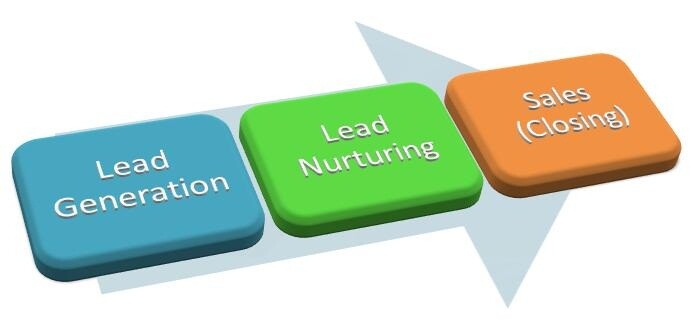
Sales and Marketing Automation that brings together sales and marketing to accomplish amazing results and convert more leads into customers. Marketing Automation refers to software and services that help move leads from the top of the marketing funnel through to becoming sales-ready leads. Marketing Automation involves multiple areas of marketing and services to form the marriage of email marketing technology coupled with a structured sales process.